Punic Wars series of three wars fought between Rome and Carthage
Move the tag to where you think it belongs, then drop it.
Try another
Your brain tends to make the past feel much closer than it really is. It is called the telescoping effect.
How much time separated the Punic Wars from Dvořák?
The Punic Wars occupy the ancient end of this interval. Nearly two thousand years then pass before Dvořák’s lifetime. The timeline shows distance, not a causal relationship.
264 BC to 1904: 2,167 years. This is the span the dated records below cover.
This expands the highlighted stretch of the timeline above. Each event sits at its date: a dot is a known date, a diamond an approximate one, and a bar a range of possible years.Years before AD 1 are marked BC. There was no year zero: 1 BC was followed by AD 1, and every span on this site is counted that way.
The Punic Wars end
Rome destroys Carthage at the end of the Third Punic War.
Source: Getty Research Institute, UNESCO World Heritage Centre, Penn Museum
Dvořák is born
Antonín Dvořák is born in 1841.
Source: National Museum, Prague
The New World Symphony reaches its first audience
The New York Philharmonic introduces Dvořák’s Ninth Symphony at Carnegie Hall, first at a public rehearsal and then in concert.
Source: Carnegie Hall, Carnegie Hall
Endpoint sources: Getty Research Institute; National Museum, Prague
What these are
Punic Wars
series of three wars fought between Rome and Carthage from 264 BC to 146 BC, at the time probably the largest wars that had ever taken place
The Punic Wars were a series of wars that lasted from 264 BC to 146 BC, a span of 118 years.
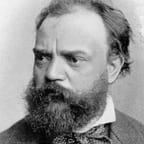
Antonín Dvořák
Czech composer (1841–1904)
Antonín Dvořák was a classical composer, an organist and a professor who lived from 1841 to 1904, a span of 63 years. Recorded as a citizen of Kingdom of Bohemia and Cisleithania. Holder of the position of Member of the House of Lords (Austria). The fields of work on record are performing arts, music education and music composing. Known for Symphony No. 9, Stabat Mater and Saint Ludmila, Op. 71, B. 144.
Picture: Unknown photographer, 1882. Gallica / Bibliothèque nationale de France, via Wikimedia Commons. Public domain. Image source and rights
0 people have guessed so far. The crowd's answer is revealed once 50 more have.